
R-410A refrigerant is a widely used hydrofluorocarbon (HFC) blend specifically designed for high efficiency and compliance with modern environmental standards in air conditioning and heat pump systems. This detailed article covers its composition, physical properties, benefits, handling, and application guidelines.
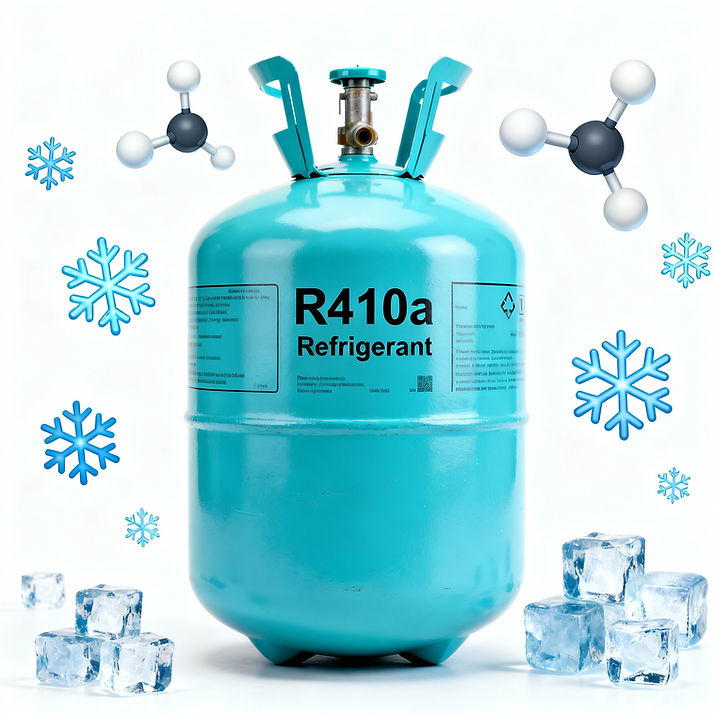
An image representing 410a Refrigerant
Overview and Composition
R-410A is an almost-azeotropic mixture composed of two refrigerants: R-32 (difluoromethane) and R-125 (pentafluoroethane), each at a 50% mass fraction. Its chemical stability, zero ozone depletion potential (ODP), and higher cooling capacity make it a preferred replacement for R-22 in new equipment.
Physical Properties
Key Benefits
Zero Ozone Depletion Potential: R-410A does not damage the ozone layer.
Higher Performance: Its pressure and refrigerating capacity are notably higher than R-22, increasing energy efficiency in cooling systems.
Safety: Classified as non-flammable and low toxicity (A1, group L1) per international safety regulations.
Thermodynamic Stability: Maintains stable properties under various temperatures and pressures.
Handling and Safety
R-410A must be charged in the liquid phase to avoid component separation due to its non-azeotropic nature.
Not compatible with mineral oils; Polyolester (POE) oils are required for lubrication, which demands new equipment designed for R-410A.
Containers should be stored in ventilated, cool areas, away from heat sources.
If a leak occurs, R-410A vapor can displace oxygen and concentrate near the ground, so proper ventilation and evacuation procedures are essential.
How to Use R-410A Refrigerant
Proper Equipment: Only use in air conditioning or heat pump systems designed for R-410A, as it operates at higher pressures than R-22.
Liquid Charging: Always charge the system with liquid, not vapor, to ensure correct blend ratios and optimal performance.
Lubricant Selection: Use only POE lubricants to prevent degradation and maintain compressor efficiency.
Leak Detection and Repair: Detect leaks with professional equipment and repair promptly to prevent GWP-related environmental harm.
Environmental Considerations
Although R-410A has zero ODP, its Global Warming Potential (GWP) is significantly higher than some older refrigerants (~2088), driving industry trends toward lower-GWP alternatives for the future.
Summary Table: R-410A Pros and Cons
| Property | R-410A Value |
| Chemical Formula | CH₂F₂/CHF₂CF₃ (50/50% by weight) |
| Molecular Weight | 72.6 g/mol |
| Boiling Point | -51.45°C |
| Critical Temperature | 72.13°C |
| Critical Pressure | 49.26 bar (4.90 MPa) |
| Liquid Density (25°C) | 1062 kg/m³ |
| Vapor Pressure (25°C) | 16.5 bar |
| Latent Heat of Vaporization | 276 kJ/kg |
| ODP | 0 |
| GWP | ~2088 |
| Aspect | R-410A |
| ODP | 0 |
| GWP | 2088 |
| Flammability | Non-flammable |
| Toxicity | Low (A1 classification) |
| Usage | New high-pressure cooling systems |
| Lubricant | Polyolester (POE) only |
| Safety Precautions | Proper ventilation, liquid charging, leak management |